
PODCAST
What's Next For Social Media?
Revolution.Social is a podcast about the future of social media built on permissionless open protocols. It's hosted by Twitter's first employee, Rabble a.k.a. Evan Henshaw-Plath.
The first episode is an exclusive interview with former Twitter CEO Jack Dorsey — whom Rabble hired.
Hear what's possible when social platforms and content are no longer owned by corporations.
About the Podcast
Building on the foundation of a new Social Media Bill of Rights, this podcast will explore how permissionless open protocols can replace corporate platforms to create a truly democratic digital commons.
We'll feature conversations with activists, technologists, and community leaders, including Jack Dorsey, Kara Swisher, Yoel Roth, Renee DiResta, and Cory Doctorow to seek their input on protocol-based social networks that would enable collective action and social transformation without requiring permission from centralized authorities.
The right to:
- 1Privacy and security
- 2Own and control your identity
- 3Choose and understand algorithms
- 4Community self-governance
- 5Full portability
Episode 43: Learning from Twitter’s Chaos for Divines Comeback!

Click to load video • No cookies until you watch
The tables have turned!
Episode 42: Rebuilding Social Media From Scratch!

Click to load video • No cookies until you watch
What happens when the person who once architected one of social media’s biggest platforms decides it needs to be entirely re-thought? From day one Blaine Cook helped build Twitter creating the @ mention, OAuth, and numerous technologies that still quietly power the internet.
Episode 41: Is the Saudification of America Underway?

Click to load video • No cookies until you watch
From sitting next to Bezos to fighting from outside The Washington Post, Karen Attiah refuses to give up. Karen Attiah went from a grad student cheering on the Arab Spring to The Washington Post’s Global Opinions editor who hired Jamal Khashoggi.
Episode 40: Vine Was Chaos. That’s Why It Worked.

Click to load video • No cookies until you watch
What happens when you take Larry King’s studio, a crack production team, improv comedy, internet chaos, and the earliest generation of Vine creators? You got Behind The Vine.
Episode 39: OG Viner on How the Creator Economy is Broken

Click to load video • No cookies until you watch
He hit a million followers on Vine before “creator” was even a job title. Now Reggie Couz (an OG Viner) sits down with Rabble to answer the question that haunts every creator: Wwhat happens when the platform you built your career on decides it doesn’t need you anymore?
Guest: OG Viner
Episode 38: How Social Media Platforms Use Regulation To Stifle Competition

Click to load video • No cookies until you watch
Are we regulating the wrong tech problems? Many opponents of Big Tech cheered recent lawsuits that found Meta and YouTube liable for violating consumer protection laws and designing their products to addict kids and teens.
Episode 37: Can We Bring Vine Back From the Dead?
Click to load video • No cookies until you watch
Is 2026 the new 2016? Back then, we didn't know that Facebook could win or lose elections, and become weaponized, that Gamergate-style harassment would take over politics, or that we were about to lose the creative, absurd, and sometimes brilliant short-form video platform Vine.
Episode 36: Why the Algorithm Loves a Villain, And How to Beat It

Click to load video • No cookies until you watch
When the internet is full of distortions, fake news, and AI-generated slop, how can facts and journalism rise to the top? Former BBC and Vice journalist Sophia Smith Galer has one possible way to beat the misinformation and exploitation.
Episode 35: Why does the internet feel worse than it used to?

Click to load video • No cookies until you watch
From scams and spam to platforms we don’t control, many of the systems shaping our online lives feel increasingly broken.
Episode 34: Ethical Venture Capital: Why Social Media Needs a Conscience (with Brad Burnham & Zoe Weinberg)

Click to load video • No cookies until you watch
In an era of hypergrowth and enshittification, can venture capitalists win by investing with conscience? Today on Revolution.Social, Rabble talks to Union Square Ventures co-founder Brad Burnham and ex/ante founder Zoe Weinberg about digital agency, human rights, and tech that makes the world more inclusive and democratic.
Episode 33: Escaping Algorithmic Binds: Creators vs. Corporate Platforms (w/ Bridget Todd & Rudy Fraser at SXSW)

Click to load video • No cookies until you watch
The biggest social media platforms in the world have alienated their users and trapped them inside algorithms that only serve corporate interests. But there is good reason to have hope for the future of decentralized social apps, made for and by their communities.
Episode 32: What Creators Can Do & AI Can’t (with Jim Louderback)

Click to load video • No cookies until you watch
Jim Louderback is a media pioneer: a journalist and columnist who went on to become the CEO of the internet-based television network Revision3, and later of the global events business, VidCon. Today, as the editor of the popular Inside the Creator Economy newsletter, he is thinking a lot about how creators can respond to AI.
Episode 31: An Alternate History of Social Media (with Ben Werdmuller)

Click to load video • No cookies until you watch
Ben Werdmuller is the Senior Director of Technology at ProPublica and a seasoned technologist who has spent his career building platforms that prioritize social impact and integrity. In 2004, he co-founded the open-source social networking software Elgg, which for more than 20 years has served as an alternative to Facebook for governments, schools, and political movements around the world.
Episode 30: Ethics Have Become Optional in Big Tech. We Can Do Better. (with Alex Komoroske)

Click to load video • No cookies until you watch
Alex Komoroske spent over a decade at Google overseeing key initiatives for ads, Chrome, and Maps, before running Corporate Strategy at Stripe. At heart, he's a champion for the open web.
Episode 29: Silicon Valley Has Lost Its Moral Compass (with Anil Dash)

Click to load video • No cookies until you watch
Anil Dash is a pioneering technologist, advocate for ethical tech, and former CEO of Glitch, who currently serves on the board of the Electronic Frontier Foundation. Looking back on his career, he says Silicon Valley has lost its moral compass because it no longer responds to shame.
Episode 28: “I've Never Been More Optimistic” (Flipboard’s Mike McCue On the Open Social Web)

Click to load video • No cookies until you watch
Mike McCue has seen a lot of changes over the years to the open web. He was an executive at Netscape, which helped liberate the web from AOL's walled garden; he served on the board of Twitter but wasn’t able to prevent it from abandoning its open API ecosystem; and now, as the CEO of Flipboard, he's building towards a more open future.
Episode 27: Building Community vs. Building an Audience (with VidCon’s Jacques Keyser)
Click to load video • No cookies until you watch
VidCon programming director Jacques Keyser says there’s a big shift happening in social media: Creators who once lived and died by the algorithm are increasingly looking for ways to “own” their audiences. “No one can take your podcast away, no one can take your newsletter away,” Keyser says.
Episode 26: The Battle for Digital Freedom and Why KOSA Ain’t It (with Evan Greer)
Click to load video • No cookies until you watch
Evan Greer is a director at Fight for the Future, the digital rights organization that helped organize the SOPA blackout and continues to fight for an internet where ordinary people have a voice. As a parent, a trans activist, and someone who's spent over a decade in the trenches of internet policy, she brings a unique perspective to the debate over how we protect kids online.
Episode 25: Open Source Safety Tools for Everyone (with Camille François)

Click to load video • No cookies until you watch
Camille François, assistant professor at Columbia University’s School of International and Public Affairs, has spent her career at the frontlines of trust and safety, including as a principal researcher at Google and the Senior Director of Trust & Safety at Niantic; now the founding president of ROOST (Robust Open Online Safety Tools), she's working to make the safety tools used by big tech companies accessible to everyone.
Episode 24: Social Media Should Be Public Infrastructure (with Ben Cerveny)

Click to load video • No cookies until you watch
"My thesis is that humans invent things all the time, and for the first 30 years, we call them technology," says Ben “Neb” Cerveny, president of the Foundation for Public Code. "And then if they work, we call them infrastructure."
Episode 23: AI Slop Is Killing the Joy of the Internet (with Bridget Todd)

Click to load video • No cookies until you watch
Bridget Todd is the host of the podcast There Are No Girls on the Internet, a fellow at Harvard's Berkman Klein Center, and a longtime commentator on how platforms shape culture. And she says the rise of AI-generated videos has turned her — an OG superfan of Vine — against short-form video altogether.
Episode 22: Decentralized Social Media for 40 Million+ Users (with Bluesky’s Jay Graber)

Click to load video • No cookies until you watch
When Bluesky hit its millionth user, it had fewer than 10 employees; today, it has more than 40 million users, but only 30 workers; that means that “everyone on the team wears a lot of hats,” says Bluesky CEO Jay Graber. It also makes it much harder to comply with regulations like the new wave of age verification laws, which have been designed for Meta-sized social media companies.
Episode 21: Team Human vs. Tech Monopolies (with Douglas Rushkoff)

Click to load video • No cookies until you watch
Douglas Rushkoff is a media theorist, author, and host of the Team Human podcast, who has been advocating for human-centered technology since the early '90s. He believes venture capital turned social media into a strip mall, but that its fundamental values can be reclaimed and re-invented.
Episode 20: Defending Digital Rights in the Surveillance Era (with Jillian York)

Click to load video • No cookies until you watch
We need a more diverse approach to internet governance, says Jillian York, the director of International Freedom of Expression at the Electronic Frontier Foundation (EFF). At the EFF, Jillian has studied the global impact of social media policies and advocated on behalf of global activists and others whose voices are often suppressed.
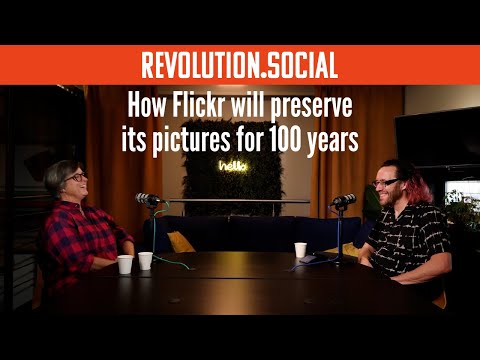
Episode 19: "Our Mission Is To Keep Flickr Pictures Visible for 100 Years" (with George Oates)
Click to load video • No cookies until you watch
Designer, community-builder, and Flickr co-creator George Oates is now the executive director of the Flickr Foundation, which is working to preserve the platform's 21 years of photos for the next 100 years. She helped create Flickr's community guidelines, designed its nested privacy controls, and launched the Flickr Commons program, which partners with more than 100 institutions to make publicly held photography collections more accessible.
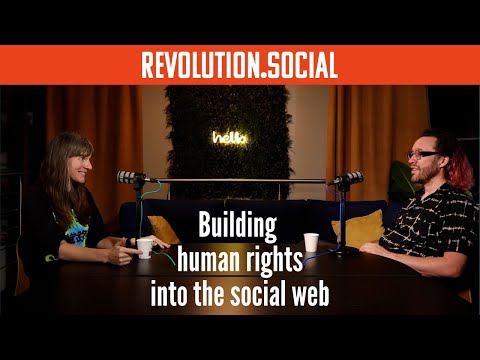
Episode 18: Building Human Rights Into the Social Web (with Mallory Knodel)
Click to load video • No cookies until you watch
Mallory Knodel is the executive director of the Social Web Foundation and former CTO of the Center for Democracy & Technology. Her roots go back to the activists, anarchists, and dreamers who built the open web, and then lost control of it to big business.
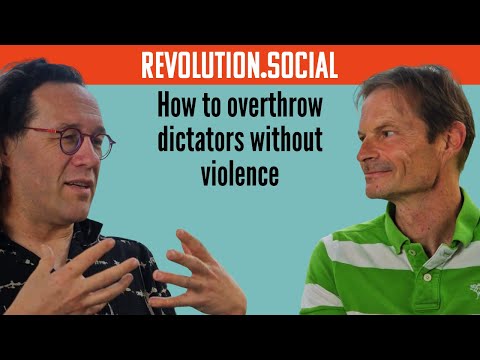
Episode 17: How to Overthrow Dictators Without Violence (with Srđa Popović)
Click to load video • No cookies until you watch
Political activist Srđa Popović led the movement that overthrew Serbian dictator Slobodan Milošević in 2000. Since then, his organization, Canvas, has trained activists in over 50 countries how to build successful nonviolent movements—and he says most people misunderstand how change actually happens.
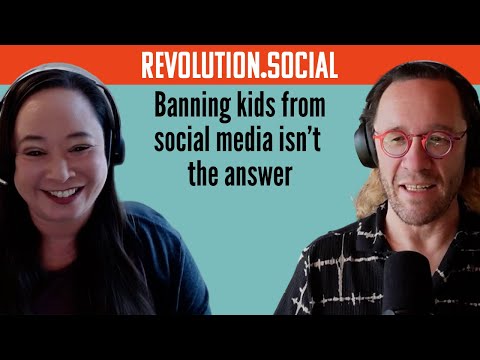
Episode 16: Banning Kids From Social Media Isn’t the Answer (with Pamela Wisniewski)
Click to load video • No cookies until you watch
Pamela Wisniewski is one of the leading researchers on how social media affects teens, working at the UC Berkeley-affiliated International Computer Science Institute. In an era of moral panics around youth online safety, she believes the solution is to empower teens and teach them resilience, rather than restricting them.
Episode 15: Jeff Jarvis on the Death of Mass Media, Twitter vs. UberMedia, and Section 230’s Brilliance

Click to load video • No cookies until you watch
In books like The Web We Weave and podcasts such as Intelligent Machines, journalist and educator Jeff Jarvis — formerly the director of the Tow-Knight Center for Entrepreneurial Journalism at the City University of New York — has traced the history of media from the Gutenberg press to AI. And he says that today’s attempts to clamp down on the internet are nothing new.
Guest: Jeff Jarvis
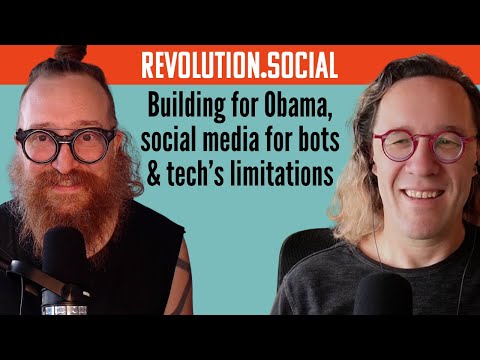
Episode 14: Harper Reed on Building for Obama, Social Media for Bots & Why Tech Isn't Always the Solution
Click to load video • No cookies until you watch
2389 Research CEO Harper Reed was previously the CTO of President Barack Obama's 2012 reelection campaign, where he helped redefine modern political technology. Before that, he was CTO of Threadless, the crowdsourced T-shirt company that accidentally invented crowdsourcing.
Guest: Harper Reed
Episode 13: “Think Like a Commoner" Author David Bollier on the Commons & Why Open Platforms Aren't Enough

Click to load video • No cookies until you watch
When a community wants to organize itself, it might decide between private ownership and state control. David Bollier has spent decades arguing that that’s a false binary, and that there is a better way: The commons.
Guest: “Think Like a Commoner" Author David Bollier
Episode 12: “The Etymology Nerd” Adam Aleksic on Algospeak, AI Slop, and the End of Writing

Click to load video • No cookies until you watch
Adam Aleksic, known to his social media followers as the “Etymology Nerd,” has built a massive audience by decoding the origins of words, accents, and memes. In his new book Algospeak: How Social Media is Transforming the Future of Language, he talks about the ways our social media algorithms have accelerated the “context collapse” that changes the words we use.
Guest: “The Etymology Nerd” Adam Aleksic
Episode 11: Rudy Fraser on Blacksky, Mutual Aid & Reclaiming Social Media

Click to load video • No cookies until you watch
Rudy Fraser is the founder of Blacksky, a community-driven project building on top of the AT Protocol while remaining independent of Bluesky, where that protocol originated. At Blacksky, he and his team are applying the principles of mutual aid and community ownership to algorithms, moderation teams, and governance tools for the Black community, giving users more control over their means of communication.
Guest: Rudy Fraser
Episode 10: Techdirt’s Mike Masnick on Growing Bluesky, Clueless Regulators & the Case for Optimism

Click to load video • No cookies until you watch
Techdirt founder & editor Mike Masnick has long argued that the internet’s power should lie with its users. In his landmark 2019 essay, Protocols, Not Platforms, he laid out a vision for how decentralized systems could preserve free speech while avoiding the pitfalls of centralized control.
Guest: Techdirt’s Mike Masnick
Episode 9: Cory Doctorow on Escaping Big Tech, Privacy Battles & “Enshittification”

Click to load video • No cookies until you watch
Sci-fi isn’t about hypothetical technologies, but rather about challenging the social impact of that tech, says author and activist Cory Doctorow. And in the real world, we must be just as conscious of the societal impact of the tech products we use.
Guest: Cory Doctorow
Episode 8: Taylor Lorenz on Moral Panics, Tech Villains & Protecting Free Expression

Click to load video • No cookies until you watch
Journalist and Power User host Taylor Lorenz has reported on the fall of Vine, influencers who accept "dark money," and the proliferation of far-right content on Substack, just to name a few. Today on Revolution.Social, she joins Rabble to talk about why governments, including the U.S., are advancing laws to restrict free speech online; the misleading moral panics that have led to apps being banned; and the challenges of monetizing online communities as platforms become gatekeepers.
Guest: Taylor Lorenz
Episode 7: Chris Messina on Hashtags, Google+ & the Unintended Consequences of Building Social Media

Click to load video • No cookies until you watch
Chris Messina is best known for co-founding BarCamp and giving Web 2.0 the hashtag. Now on Revolution.Social, he joins Rabble to talk about the bigger picture of what has gone right, and wrong, with social media.
Guest: Chris Messina
Episode 6: Medium CEO Tony Stubblebine on AI Slop, Quality Content & Social Media Fragmentation

Click to load video • No cookies until you watch
After the introduction of generative AI tools such as ChatGPT, the blogging platform Medium got ten times busier, says CEO Tony Stubblebine — and that was not a good thing. "Most of it was slop," he says.
Guest: Medium CEO Tony Stubblebine
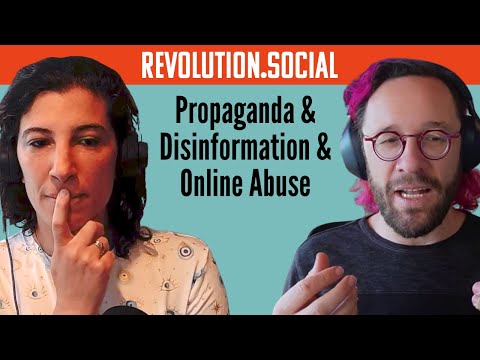
Episode 5: "Invisible Rulers" author Renee DiResta on Propaganda, Disinformation, & Online Abuse
Click to load video • No cookies until you watch
Renee DiResta has spent a decade tracking how small groups can hijack global conversations — and why the same tactics still work today. The author of "Invisible Rulers" and a leading academic researcher on online influence, she joins Rabble on Revolution.Social to unpack the hidden forces shaping what we see — and believe — on social media.
Guest: "Invisible Rulers" author Renee DiResta
Episode 4: Substack CEO Chris Best on Democratizing Media, Content Moderation & Freedom of Speech

Click to load video • No cookies until you watch
"If you're a consistent advocate for freedom of the press, you will unfortunately have occasion to quarrel with every party and every side of the political spectrum," says Substack CEO Chris Best. As one of the most important platforms for independent writing online, and one of the only ones not reliant on advertising, Substack has sometimes attracted controversy for its content moderation policies.
Guest: Substack CEO Chris Best
Episode 3: Yoel Roth on Banning Trump, Battling Bots & the Difficult Job of Trust & Safety

Click to load video • No cookies until you watch
"Content moderation decisions are like assholes," says Yoel Roth, the former head of trust & safety for Twitter. "Everybody's got one."
Guest: Yoel Roth
Episode 2: Kara Swisher on Tech Founders' Flaws & Why Social Apps Are the New Cigarettes

Click to load video • No cookies until you watch
The founders of social media companies like Facebook and Twitter never cared about the lofty ideals they claimed, says longtime tech journalist and podcaster Kara Swisher. "I never thought they were idealistic.
Guest: Kara Swisher
Episode 1: Jack Dorsey on Selling Twitter, Leaving Bluesky & What He's Building Next

Click to load video • No cookies until you watch
Twitter never should have been a traditional tech company, says Twitter co-founder and former CEO Jack Dorsey. Instead, it should have been designed as a protocol — like email, or podcasting.
Guest: Jack Dorsey
Episode 0: The Internet Doesn’t Have to Be Like This

Click to load video • No cookies until you watch
Revolution.Social is a podcast about the future of social media and reclaiming our digital communities, hosted by technologist and community advocate Rabble, a. k.
Watch the Trailer Episode

About the Host
Evan Henshaw-Plath (rabble) - Twitter's first employee and advocate for decentralized social media.
The Campaign for Social Media Rights
Watch rabble explain the vision behind revolution.social and the urgent need for protocol-based social networks that empower communities.
Topics We'll Explore
The podcast will dive into these key areas that are essential for building a permissionless, protocol-based digital commons that empowers people and communities.

Reimagining Social Media
Why we need to start over with permissionless protocol-based social media and how it can enable revolutionary change.

Privacy & Security
How open protocols can provide better privacy and security than centralized corporate platforms.

Self-Sovereign Identity
The power of controlling your digital identity in protocol-based networks and its role in authentic connection.

Transparent Algorithms
Why open-source recommendation algorithms are essential for democratic information sharing.

Community Governance
How permissionless protocol-based systems enable true democratic governance of digital spaces.

Data Portability
The technical foundations of data portability in open protocols and why it matters for user freedom.

Building the Future
Practical steps toward building protocol-based social networks that can make revolution possible without gatekeepers.
Listen to the Podcast
The podcast will be available on these platforms when it launches.





Newsletter
Loading...